THE VULTURE + AI EVOLUTION

Updated: Mar 28

I initially set out to make a trailer for my book. That was the original plan.
But as I began working with AI, the technology evolved — and so the project evolved with it. What started as a book promotion became something far more deeply inspired.
At first, I considered filming a traditional trailer. I was conceptualizing a treatment, talking with a friend who filmed an old music video for me back in my indie band days. I thought about coordinating with actor friends. But with no budget or equipment, I was already asking too much of myself.
Then I had a new spark of an idea.
This AI thing has potential.
Up to that point, I’d mostly been using AI to generate images of my characters and build visual elements of the world. Then image-to-video rolled out.
Game-changer.
Sort of.
It wasn’t great at first. It was new. Clumsy. Limited. But seeing my characters breathe and blink was an incredible gift.
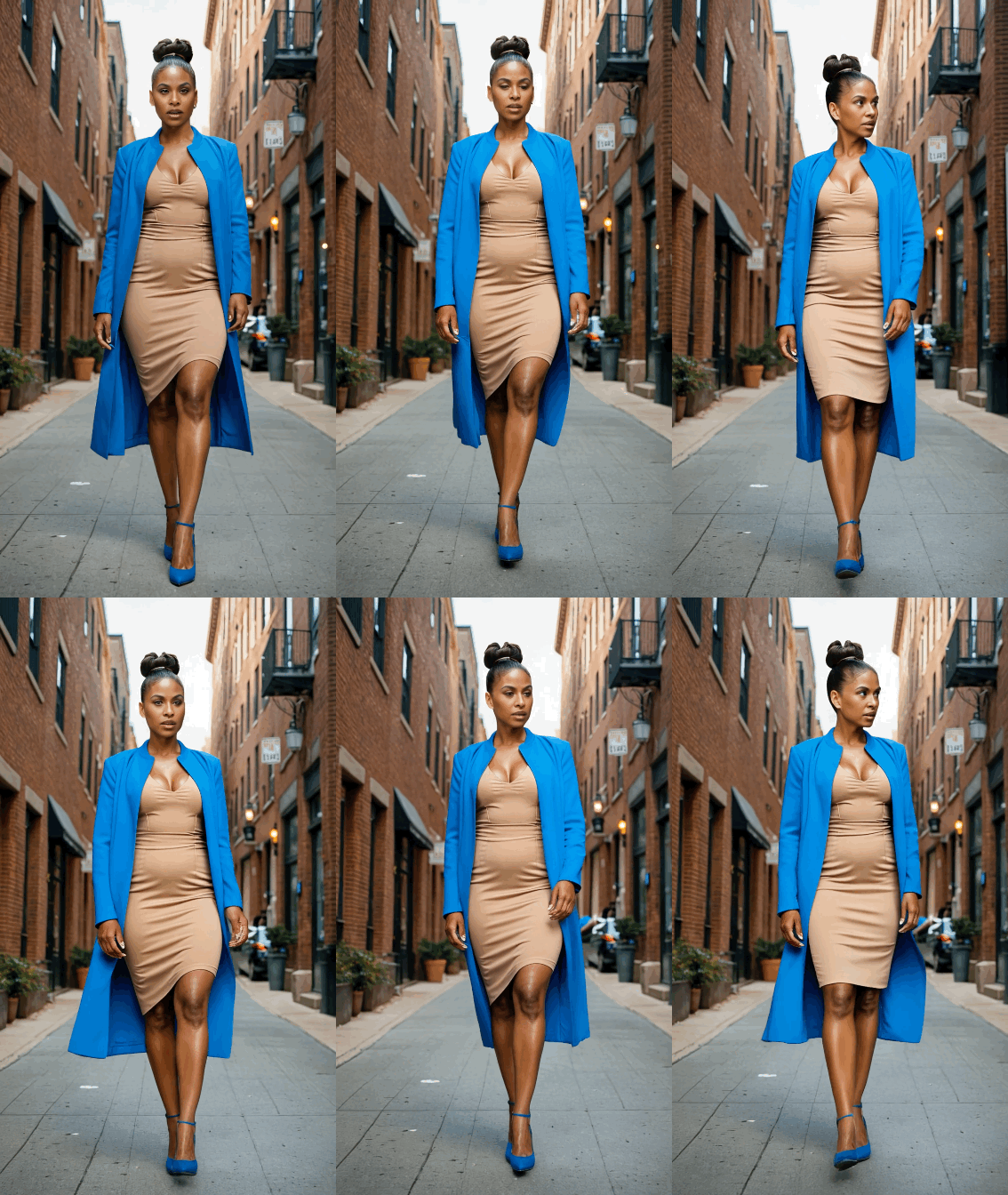
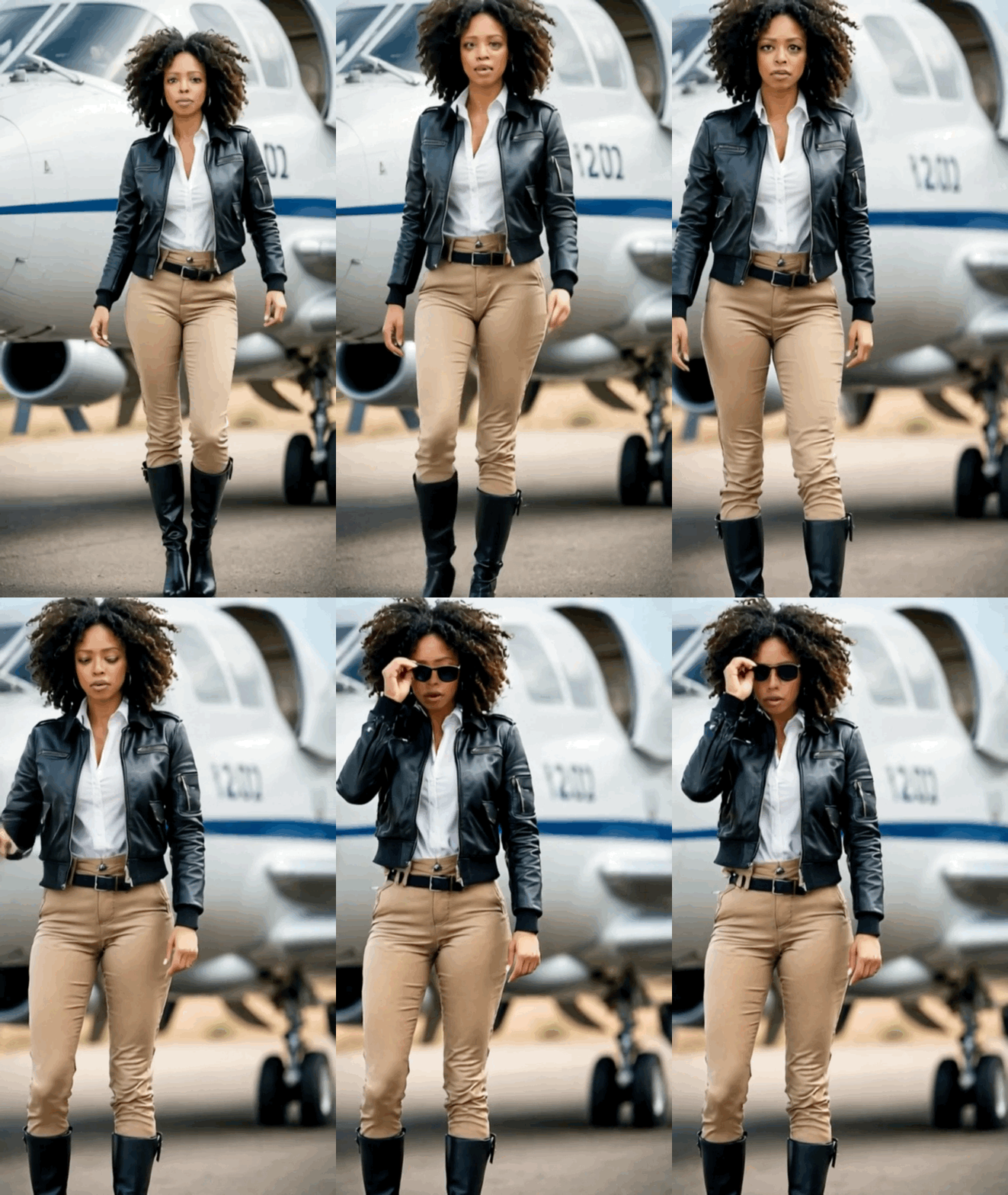
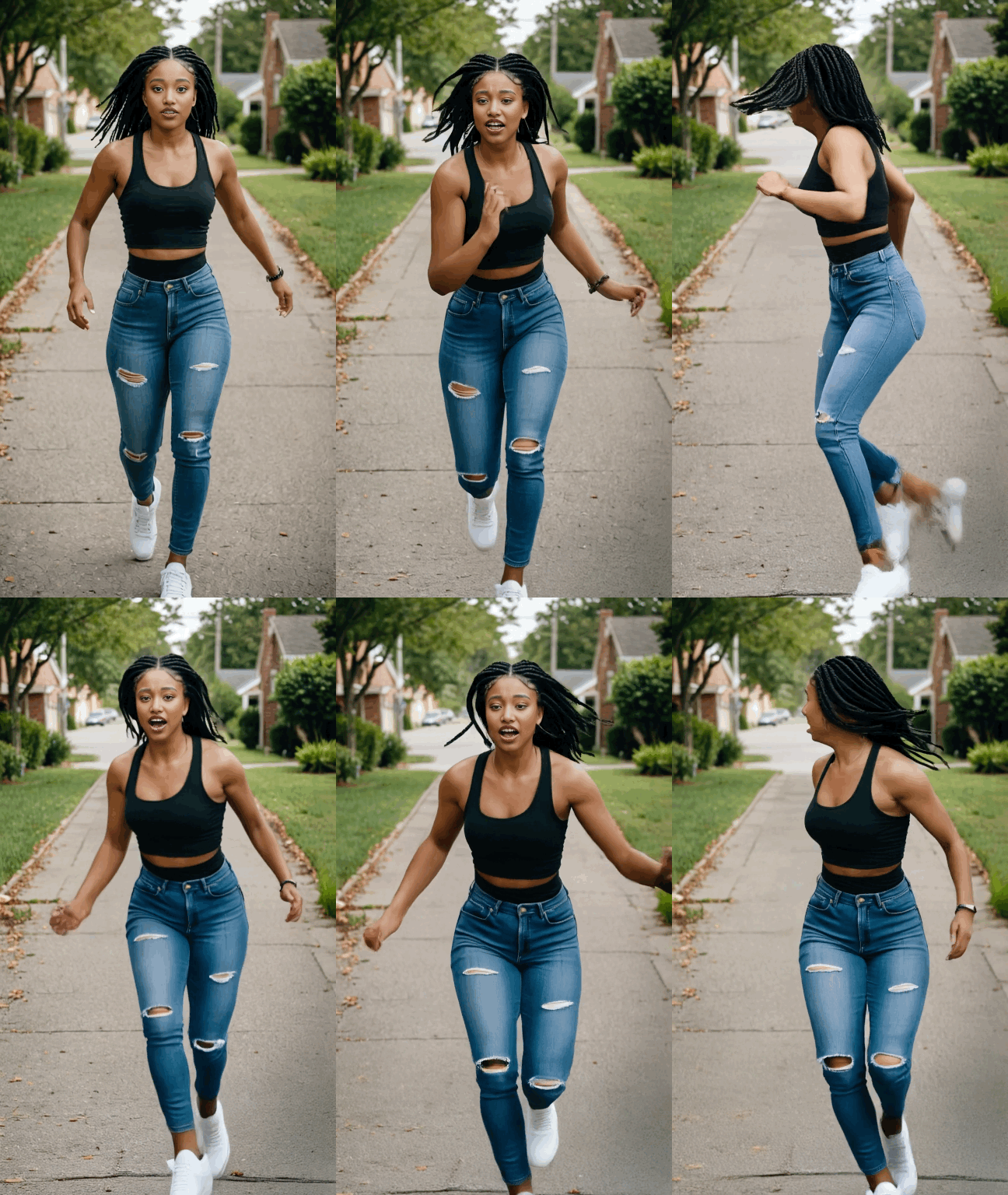
AI evolves constantly. And with each upgrade, I could make them do a little more than blink.
When image-to-video became truly viable, it was right as I was preparing to release Book One — when I needed a trailer.
So I decided to build it myself with AI. But I was still using this little app on my phone with the range of motion and control. That's when—after some searching—I discovered more advanced platforms with cinematic capabilities.
I made the switch... and quickly realized I was in over my head.
I burned through credits on failed scene designs and was left with an incomplete project — forced to wait a month for my subscription to renew. But instead of quitting, I used that wait time to learn the tool.
That’s when everything shifted.

I realized I could design the kinds of visuals I’d only ever dreamed of creating — without a Hollywood-level budget, crew, or location.
The “trailer” became something else entirely. It became a character-featured cinematic series. Each video still plugs the book at the end, sure. But they far surpass anything resembling an ad.
I essentially created my own fan fiction.
The videos don't directly promote what’s inside The Elevator series. Instead, they explore the dramatic backgrounds of the four women leading up to their appearances in The Draft.
There’s some bleed from the books, of course. But these vignettes function more like prequels than marketing content.
And they’re so internal, the people who will truly understand what they’re watching are the ones who’ve read the series. The ones who know these women.
Still, I built them to stand alone — to intrigue, to draw interest, to spark curiosity.
It All Starts With Monica

Monica’s internal thoughts set the stage for everything.
She’s tired of Death stalking her. And she chooses to fight back. With the help of a mysterious masked man.
But, that wasn’t the original concept.
My first attempt was a complete AI flop. I wanted all four women stepping out of the elevator — reactions, suspense, drama. But I couldn't build the scene. After venting to my husband, he made one simple suggestion — and that sparked an entirely new direction.
The result was PROVOCATION.
I remember working on it during one of those late-night creative bursts. Because… I have kids.
I was too inspired to wait. So I recorded the voiceover in Voice Memos on my phone — AC blasting, whispering so I wouldn’t wake the house. I fully intended to re-record it later.
But once I dropped it into the timeline and added some audio effects, I thought: OMG! I love this.
So I kept it.
Since I was still new to advanced AI creation, I spent hours tweaking images to achieve the flow I needed. Hours of design work for 54 seconds of cinematic narrative. 😄🤦🏽♀️
You really do have to love this kind of work.
The music I chose became so perfect it evolved into the thematic backbone for the entire series.
Monica’s video was short. But it showed me what was possible.
Which explains why the next feature stretched to nearly five minutes.
LEVELING UP WITH JILISA

This project revealed the next challenge:
Character consistency.
If I'd given AI free rein to design characters for me, the process would have been much simpler. But, that's not how I create.
These women existed long before AI. I did extensive compositing and editing work to get AI to approximate the faces already living in my head. It felt like a fight at times. AI constantly tried to change their features — even their ethnicities.
Animating Jilisa across multiple angles, positions, and locations required compromise. Sometimes I had to sacrifice consistency to preserve a strong shot. But, I made peace with it. I actually like the subtle tells that this is AI. I'm not trying to dupe anyone, I just want to tell a great story.
I look forward to the day when my film projects look real, because they are. When The Elevator becomes an adapted series or film that’s when I’ll obsess over visual continuity
For now? Narrative is king.
And I'm really happy with the way ISOLATION turned out. Truly heartbreaking, yet so triumphant.
BREAKING THINGS IN WITH ZOEY

Zoey's feature was different because, the video actually already existed.
SUFFOCATION was my first step into advanced AI editing. This was the project I couldn't complete.
Before deciding to create a trailer, I’d built simple character intros for Monica and Jilisa using clips generated in the PhotoLeap app on my phone. The plan was to create similar introductions for Zoey and Sheena.
That's when I discovered LTX Studio and transitioned into advanced AI editing—intent on building the last two intros there.
As I mentioned earlier, there was a steep learning curve. Failed generations burned through my credits. The project stalled. But when I reviewed the few assets I’d successfully generated, I decided to build with what I had.
I dropped the clips into Final Cut Pro and what I created was far better than my original concept.
Then, when I found the music—the whole video elevated.
The only problem? Character consistency was virtually nonexistent.
Zoey had multiple faces. Slight age shifts. Varying body types. The only reason it worked was because of that distinctive pink hair and her outfit. Otherwise, to anyone else, the video would have appeared to been about five different women.
I decided to lean into it—consider it a form of symbolism. Zoey is indeed a woman of many faces. I finalized the project with some custom motion graphics, plugging the book, and released it as a standalone teaser.
Fast-forward to The Vulture project. After discovering more and more ways to achieve my vision with PROVOCATION and then ISOLATION, I revisited Zoey's feature. I rebuilt the inconsistent scenes and added the final moment that tied her video into the larger narrative of the series.
Some clips still deviated, her appearance shifted some—but it was a vast improvement.
What mattered most was the story.
Then came the final installment.
SHEENA'S GRAND FINALE

Sheena’s feature was my boldest attempt yet. A full, indulgent ten-minute video.
By then, I had learned enough to execute TEMPTATION almost exactly as envisioned. Still, AI limitations required adjustments. Character consistency remained a challenge. Her face shifts noticeably throughout and post-production tweaks only go so far.
I also had the audacity to include a supporting cast.
Multiple characters. Supernatural elements. Heavy effects.
It was… ambitious.
But again — narrative is king. Once I'd effectively told her story, that was the mark of the project's completion for me.
THE TOOL VS THE VISION
The Vulture was a rewarding project to work on. But, there were times it got a bit frustrating. Prompting frequently felt like gambling. Even with efficient workflows, there were times AI simply could not get it together. So, for the sake of peace and productivity, I adjusted my vision in order to push on.
Interestingly, most of these projects were created using Envato’s AI tools. Other more advanced AI creators rarely mention Envato, but it worked well for me. LTX delivered high-quality output, but required forensic-level prompting that stalled productivity and didn’t justify the cost. So, I actually transitioned almost completely from LTX to finish The Vulture with Envato. It helped that Envato has been offering unlimited generations since October for less than half of what LTX charges per month. This made failed generations a non-factor and ensured I could complete my projects.
But their unlimited promotion is ending soon. And now that I've fully developed the visual landscape for The Elevator, I want deeper control. More intentional tools. Custom systems that support my vision — not the platform’s limitations.
So, my time with Envato is likely coming to a close. And I'll be exploring this next stage in video production.
Flaws and all, I love these videos. This project was cherished time spent with my characters. As close to being in the same room with them as I'll ever get.
If you’re new here, The Draft is where their stories truly begin.


Comments